

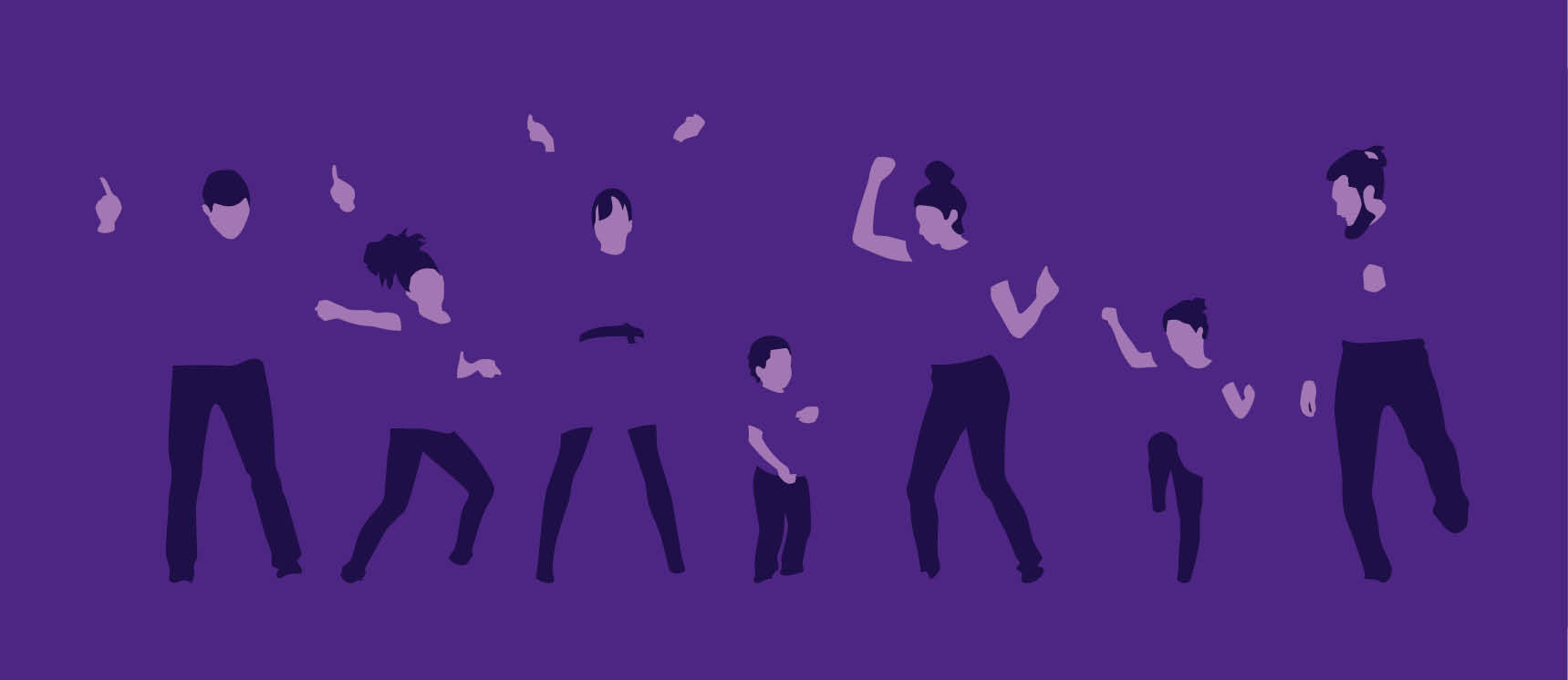
Dance Therapy: How Movement Supports Brain Health – Live virtual talk on Jan. 24 at 2 p.m. Central
When you hear “dance therapy,” what comes to mind?
For some, it sounds intriguing. For others, it can sound hard to take seriously or even intimidating, as if you would need rhythm, flexibility, or a willingness to perform in front of strangers.
Ahead of her upcoming Mensa Foundation talk, Dance Therapy: How Movement Supports Brain and Mental Health (Jan. 24 at 2 p.m. Central), we sat down with Lisa Manca, a board certified dance/movement therapist and licensed professional clinical counselor, to answer common questions about what dance/movement therapy is, how it works, and why movement can be a powerful lever for brain and mental health.
Q: First, what is dance/movement therapy?
Lisa: The American Dance Therapy Association defines dance therapy as the psychotherapeutic use of dance, movement, body awareness, and embodied communication to foster healing and well-being for all individuals, families, and communities. Dance/Movement Therapy (DMT) is a clinical, evidence-informed therapeutic approach that uses movement as a pathway to emotional, cognitive, and physiological integration. In DMT, movement is not extra. It is information, expression, communication, regulation, and patterns and habits, all at once.
If the phrase “dance therapy” feels confusing, you are not alone. Many clinicians use “dance and movement therapy” because it emphasizes both movement and dance, including posture, gesture, rhythm, tension, and how the body responds in relationships, stress, and safety. This is not about choreography or performance. The goal is to notice natural movement patterns and use them in therapeutic work. DMT also includes verbal processing to help clients make meaning of what they experience in the body.
Q: How does movement support brain health?
Lisa: We often treat the brain as if it is separate from the body. Yet the brain is constantly receiving, interpreting, and responding to bodily signals such as breath, muscle tension, heart rate, sensory input, and posture.
Movement can support brain health by:
- Supporting nervous system regulation (shifting out of chronic fight, flight, or freeze)
- Improving interoception (the ability to sense what is happening inside your body)
- Creating access points when words are limited (overwhelm, shutdown, trauma response)
- Building coherence between what you think, feel, and do
- Creating avenues for expression, creativity, and nonverbal connection
For many people, especially in high-stress or high-performance environments, the body becomes the last to be consulted. DMT brings it back into the conversation.
Q: How does dance/movement therapy help in ways that talk therapy alone cannot?
Lisa: Talk therapy can be profoundly helpful, especially for insight, meaning-making, and relational repair. But sometimes we reach a limit. We understand our patterns, we can explain our history, we know what we should do, and we still feel stuck.
In those moments, the issue often is not a lack of insight. It can be a lack of integration.
The body may hold stress responses and trauma that do not shift just because we can describe them. DMT can help you notice what your system is doing in real time and observe habitual patterns . It can then help you experiment safely with new movement responses, which can bea new way of navigating the world in your body. Many people benefit from both approaches. They can be complementary.
Q: What about gifted people, neurodivergent people, or anyone who “lives in their head?”
Lisa: If your mind works quickly, that can be one of your greatest strengths. It can also be your most reliable coping tool. Many gifted and neurodivergent individuals try to outthink stress, out-logic discomfort, and out-analyze emotion. It does not work. . . You cannot continually outthink your feelings without, at some point, feeling disconnected from yourself and your body.
Embodied work can be especially useful because it offers another channel of information and way of processing emotion. It can help you catch early signals before overwhelm spikes, and it can help you distinguish between “I’m thinking something” and “I’m sensing something.”
This is not anti-intellectual. It is about adding depth and range and offering additional tools of coping.
Q: What about people who struggle to verbalize emotions, including autistic individuals?
Lisa: Not everyone processes emotion through words, and not everyone experiences emotion in neurotypical ways.
DMT can be supportive because it does not require perfect language. Movement can become a form of communication. Pacing, rhythm, gesture, stillness, repetition, proximity, and shifts in tension all tell a story. It can also create pathways for connections that are not dependent on constant verbal exchange.
This is one reason DMT can be helpful in settings where language is limited, whether by neurotype, trauma response, developmental stage, or cross-cultural and multilingual contexts.
Q: What can attendees expect in your Jan. 24 session?
Lisa: This is a live virtual presentation designed to be accessible and respectful of privacy and comfort.
We will cover what DMT is and is not, the research-informed rationale for how dance/movement therapy supports brain and mental health, practical examples, and a short, optional guided experience. Participation is always your choice. Cameras can stay off, and the movement portion can be done seated.
There will also be time for Q&A. No dance experience is required. No performance is expected.
A simple practice to try right now (60 to 90 seconds)
Before the session, here is a small check-in you can try today. No movement is required.
- Ask yourself: “How am I feeling?”
Scan gently from head to toe. Do not analyze. Just notice. - If “good” is hard to find, locate a part that feels neutral or “okay.”
Rest your attention there for one breath. - Ask: “What do I need?”
Do not judge the answer. Just listen for the first honest response.
Join us Jan. 24 at 2 p.m. Central

Lisa Manca is a licensed professional clinical counselor (LPCC) and board-certified dance/movement therapist (BC-DMT) based in San Francisco. She helps people navigating anxiety and depression reconnect with themselves through body-based therapy, integrating dance/movement therapy and attachment theory to support emotional processing, improve relationships, and build lasting change. Visit Lisa’s webstite here.






Comments (0)