

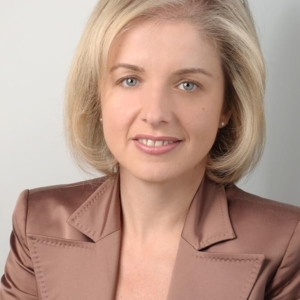
Alma Dreković is a business and career coach, writer, and researcher focusing on the psychological and social dimensions of giftedness and high giftedness in adults.
She works with professionals and artists, helping them understand and integrate their exceptional sensitivity and intellect in both personal and professional fulfillment.
She is the author of Weiblich, hochbegabt, unterschätzt (Klett-Cotta, 2023) and co-author of the Coaching Cards for the Gifted (German edition). Her work explores giftedness through psychological, sociological, and analytic perspectives, with a special focus on women and empowerment. Alma co-founded the international Highly Gifted Expert Group (HGEG) and collaborates with the Dutch Institute for Gifted Adults (IHBV).
My story is not about numbers. It begins in translation — between languages, between countries, between ways of seeing. For years I thought that being “different” came from growing up between worlds. Only much later did I discover that it came from the structure of my mind itself, from the way perception and thought seemed to echo beyond their usual boundaries.
Giftedness is not only a matter of capacity but of identity — how the mind organizes experience, integrates complexity, and stays whole. This integration, delicate yet vital, lies at the core of what we now call brain health: the harmony of thought, feeling and meaning.
A Childhood in High Definition
I remember an almost crystalline awareness as a child, an unusual intensity of perception and an instinctive clarity about the world around me. I grasped things with a speed and depth that felt natural yet out of sync with other children. Language came early: complex sentences, rich vocabulary, in two alphabets and two worlds.
I never attended kindergarten and could read and write at the age of five. When I entered primary school in Germany, all children were tested routinely for cognitive abilities. My results stood out, though at that time no one used the word “gifted.”
What I remember most from that first year is the sheer excitement, the love of learning for its own sake. Teachers were visibly surprised and suggested I might benefit from a more challenging environment. I did not think of myself as better, only as absorbed, quietly observant. Looking back, it feels as if my early self existed in a state of high awareness, a mix of intensity and solitude that would stay with me for decades.
The Friction of Sensitivity
When I was fourteen, the world itself seemed to fracture and so did my sense of belonging. The war in the former Yugoslavia, the place my family came from, turned questions of identity and justice into something painfully real. Those reflections on philosophy and ethics never really left me.
I had always sensed that I was different. It was a difference both thrilling and isolating. Life appeared in high resolution: music moved me deeply, people fascinated me, languages were fields of endless nuance. Yet that sensitivity often overwhelmed me; I took in more than I could contain or understand, feeling at once profoundly connected and profoundly unsure how to live with such awareness. That search for balance eventually found its expression in language.
Between Languages, Between Worlds
Learning German came later for me than for most children. I taught myself with dictionaries, radio programs, and an old tape recorder until I spoke and wrote it fluently. Words became my way of claiming a place in the world.
French soon entered my life, captivating me with its musicality and intellectual clarity. Language felt like an instrument, each one a key to a new world, a different way of thinking and feeling. That fascination became a lifelong passion, each language revealing a new dimension of self and perception, a new voice, a new facet of identity.
Living between linguistic and cultural codes was both enriching and difficult, especially in adolescence, when belonging and identity had to be constantly negotiated, both inwardly and outwardly. It taught me to translate not only words but values, emotions, and identities.
Years later, in my professional life, these same inner dynamics from childhood resurfaced. In a demanding Japanese working environment, I felt a dissonance, not cognitive, but existential. Translation between worlds became my unofficial role, an everyday navigation of nuance, discipline, and unspoken rules. The Japanese language and its modes of interaction fascinated me: the subtlety of communication, the precision, and quiet discipline that shaped daily life.
For a long time, I explained my difference through culture: perhaps I was simply “the other,” molded by multiple cultures. Only later did I understand that the roots of this difference lay deeper, in the very structure of how I perceive and make sense of the world.
From Self-Exploration to Purpose
In psychoanalytic work, reflection deepened, language became self-revealing, and giftedness emerged as both gift and tension. It became clear that understanding giftedness was not only an intellectual pursuit but a human one, a question of identity. The turning point came when this awareness began to bridge my inner and outer worlds, and the wish arose to bring it into the world: to work at the intersection of mind, emotion, and meaning, and to accompany people navigating the intensity that comes with deep perception. From then on, my life and work began to align.
Over time, this evolved into my professional focus: business and career coaching for gifted and highly gifted adults, professionals and artists seeking to integrate intellect, sensitivity, and purpose. What inspired me most was the question of identity, especially in the lives of gifted women, how brilliance, sensitivity, and social expectation intersect. This led to a book in 2023 exploring giftedness through psychological, sociological, and analytic lenses, asking how awareness and self-understanding can foster empowerment rather than isolation. Today my work centers on the lived experience of gifted adults and on giving language to what often remains unnamed.
As Etel Adnan wrote: “Identity is your destiny.” For gifted adults, identity is both foundation and horizon, the ground on which brain health rests. Giftedness, after all, is not about numbers or labels, but about how one’s cognitive, emotional, and moral dimensions cohere into a meaningful whole. When that integration is nurtured, the mind not only thrives but remains resilient: this to me is the essence of brain health.




Comments (0)