


Monisha is a Play Architect and Somatic Practitioner who uses embodied play to help clients grow authentically by accessing their somatic intelligence and expanding self-trust. Drawing on her own lived experience as a recovering overachiever, she works with over-doers, emerging adults, and heart-warriors who are seeking more clarity, vitality and ease. Monisha is a Certified InterPlay Leader and Life Practice Program Leader for the Washington, DC region. Learn more at www.monishamittal.com.
Finding Balance through Play and the Body
Many gifted adults struggle with thriving in professional organizations—not because they lack ability—but because their range exceeds their environments. This can lead to a fragmented sense of Self, where some parts over-perform and over-adapt while shyer, sensitive parts remain unexpressed in systems that don’t fit. This experience can feel lonely, exhausting, and contribute to anxiety and depression.
In a recent gifted support group,[1] I was surprised by how much of my experience of feeling “extreme” in work organizations was shared by every other participant. It wasn’t only how we thought or formed connections—we all experienced the world more deeply and were highly sensitive to it.[2] While this recognition created a sense of camaraderie and relief, the experience of continually adapting to fit outside of the group still remained.
What if belonging didn’t have to be solved externally first? And what if a different kind of inner coherence, filled with ease and joy, were possible?
This article offers Internal Family Systems as a framework for realizing wholeness and embodied play as a process for lived transformation. Gifted adults benefit from a balanced expression of gifted parts, experiencing belonging from the inside out, and a stronger capacity to live life from self-trust, clarity, and even joy.
When Capacity Becomes Constraint
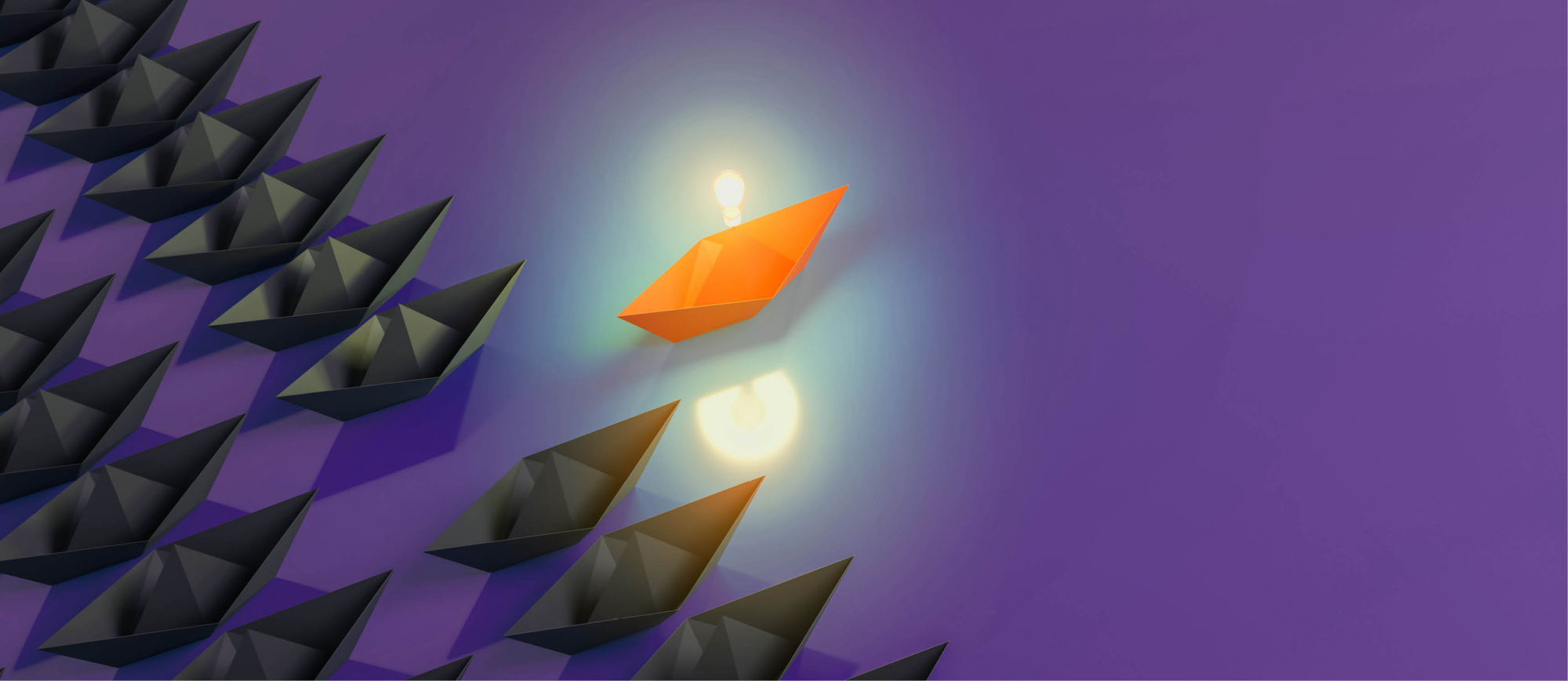
With 20 years of experience as an organizational consultant, I can tell you that the typical work organization is not built for gifted adults. Linear systems tend towards predictability, specialization, and pre-defined processes. In contrast, gifted adults are often oriented toward possibility, complexity, and improvement. The Mensa Foundation’s 2024 Study of Unmet Needs found that gifted adults identified their need to pursue multiple interests “rather than being forced to choose only one” as their 5th highest unmet career need,[3] underscoring how constrained they feel by organizational roles. We tend to be wired for cross-domain, future-state thinking, with a humanitarian drive that exceeds organizational boundaries. I felt most myself in the “in-between spaces”—translating and distilling operational language across departments, connecting teams across silos, and developing a broader organizational picture.
When you can see across systems, feel deeply, and think nonlinearly, the problem isn’t performance, it’s fit. In organizations, gifted adults are often misunderstood not because of deficiency, but because of excess. Through skip thinking, we make connections so quickly that steps obvious to us remain invisible to others. Multi-potentiality draws us to multiple domains and expresses capabilities across them. Add to this heightened intellectual, emotional, imaginational, and sensory sensitivity, and our depth and passion can be experienced as “too much” rather than as insight or capacity. The Mensa Foundation study also found that gifted adults consistently reported frustration with not feeling understood and lacking meaningful interaction with peers and professionals, reflecting how often their complexity is misread rather than met. Organizations often have clear structures for addressing underperformance, but they may be less equipped to recognize or support the intensity and complexity gifted adults bring.
In varied and subtle ways, gifted adults are asked to be less, not more, within established structures. Over time, this mismatch may lead to self-judgment, professional dissatisfaction, and quiet demoralization. As we exert effort into fitting into systems that do not support our range, we can experience long-term anxiety and depression alongside a growing sense of internal division and strain. The struggle is real: many gifted adults encounter structural barriers to self-actualization—particularly constraints of time and money shaped by how work and benefits are organized in society.[4]
Over the course of their careers, many long for more balance with their giftedness, something that feels like wholeness rather than splits.
Reclaiming the “Too Much”: A Parts-Based Lens
Internal Family Systems (IFS) offers a psychological framework for individuals to come into harmony with their giftedness. Developed by Richard Schwartz, IFS is a therapeutic model which recognizes the psyche as consisting of many parts.[5] While each part has its own role and emotions, a core Self maintains curiosity, clarity and compassion. From protectors, managers, and firefighters, to even those in exile, all parts are equal. In fact, Schwartz states there are no bad parts, only parts placed in extreme roles. Through compassionate dialogue led by Self, you listen to parts, recognizing their role on your behalf. Building trust, parts unburden and integrate under Self leadership, relieving conflict and restoring harmony in your system.
IFS naturally welcomes giftedness and its traits because it is built for multiplicity, including parts that feel extreme. Rather than treating intensity, skip thinking, perfectionism, emotional sensitivity, or depth as “too much” or problems to be fixed, IFS views them as parts in a system that are asking to be understood. Due to gifted sensitivities, these parts in particular may require our extra attention and compassion. A perfectionist manager part may reflect a drive to stay safe through achievement. An intense part may carry loneliness from being misunderstood. A masking part may have learned to hide sensitivity or brilliance when authenticity felt unsafe. Since the way giftedness is shaped is unique to each person’s life experience, what each part carries is deeply personal.
As you integrate giftedness into a broader sense of Self, parts relax and internal patterns soften. To date, pilot studies of IFS have shown reductions in depression and increases in self-compassion.[6]
Self-Trust and the Body
While IFS utilizes somatic awareness, gifted adults often trust their minds to navigate experience through analysis, prediction, and pattern recognition. When working with anxiety and depression, many of us can analyze triggers and explain patterns brilliantly while still feeling fragmented inside. In IFS, this can show up as analytical manager parts that keep feelings from surfacing, and create an intellectualized relationship to parts or core Self, inhibiting fuller integration.
Yet understanding ourselves is not the same as trusting ourselves. Insight is not the same as feeling. This is where a more direct experience through the body becomes necessary.
Somatic psychology has consistently shown that lived experience is regulated, stored, and integrated through the body. Work by Bessel van der Kolk and Peter Levine demonstrates that trauma is physical, remembered in the body, and can be physically processed to realize healing. Not only a container of trauma or relational wounds, the body is where coherence and integration emerge.
While cognition can observe and understand experience, embodiment accesses and integrates your experience more directly. Beyond somatic awareness of felt-sense signals from your body, embodiment means shifting from monitoring the body to inhabiting it. Here, deeper layers of somatic intelligence work on your behalf:
Bottom Up Processing. The body processes experience through bottom-up pathways that raise felt-experience into conscious awareness before cognitive interpretation. While parts can tell their stories, they can shift and integrate directly in the body in real time, often before words emerge.
Coherence and Ease. As demonstrated in Moshe Feldenkrais’ work, the body functions as a learning system oriented toward coherence and ease as a unified field, continuously organizing toward more effective and free action.[7] Too, no part is better or worse—the body naturally relates to all parts without judgment and knows how they relate to a larger whole.
Inner Truth. In this process, your body sends feelings, sensations, images, and implicit memories as “truth signals” about your inner state through interoceptive processes. This arrives as a felt-sense knowing before cognition.
Here, self trust grows experientially in your system as a physical reality. Simply activating this embodied connection allows the mind to rest.
Embodied Play as Pathway for Wholeness
In my work, I reliably bring clients to “below the neck” awareness through embodied play, using an improvisational system called InterPlay.[8] Through simple forms using movement, storytelling, and voice, people make creative choices with their body. For example, you might explore movement qualities with your hand—slow or fast, smooth or choppy. As you play with these choices, a spontaneous “hand dance” emerges. There are no predetermined outcomes; the exploration is sensory, and choice exists within simple constraints.
Elegant in design, the forms unlock your somatic intelligence and harness play and expressive arts therapies to support fuller integration through:
Increased Safety and Expanded Possibility. Play offers a space where parts experience choice and authentic expression.
- In play, there is no failing. When your system shifts attention away from performance and evaluation, it experiences increased safety and protector parts relax.
- Play shifts the nervous system toward parasympathetic states, where safety, curiosity, and engagement dominate, naturally aligning you with your core Self.[9]
- Without judgment, parts of ourselves that—like highly sensitive parts—are shy, hidden, over-managed, or afraid of getting it wrong express themselves more readily.
- Because play engages reward-related neurotransmitters such as dopamine, you become more open to new risk and possibility. That is, play takes you to your edges with greater safety and ease.
Embodied Integration.
- Movement enriches bottom-up sensory processing, increasing awareness of inner states and the body in space.[10] In practice, I’m continually struck by the body’s intelligence for raising the right experiences into awareness at the right time, making the IFS process less effortful.
- Too, non-verbal tools like movement and sound allow parts to express themselves directly, below words—especially pre-verbal parts such as inner children. Movement engages space, offering parts a rich vocabulary spanning distance, speed, rhythm, stillness, and gesture. Sound expresses mood through frequency and pitch. Experiencing this expression allows you to safely know what a part carries.
- At the same time, movement supports nervous system regulation[11], increasing felt-sense safety throughout your system. Movement distills your experience, allowing your story to emerge with texture and depth without overwhelm. Anxious parts and other vigilant parts relax as your nervous system stop signaling threat. From this embodied clarity, new ways of relating to the past emerge, allowing the mind to form a new story from a compassionate lens.
Authentic Relationship to Parts. In embodied is-ness, you lose interest in fixing or controlling a part. Embodying your core Self, you remain open to what parts want to say, attuned to your relationship. In a play state, no longer motivated by goal or outcome, you choose for your own joy. Beyond safety, your system reorganizes around vitality and aliveness. Playful movement, along with sound and words, serves as a conduit for authentic listening, dialogue, and forming new agreements. Repeated experiences of playful movement can support neuroplastic change, gradually softening patterns of anxiety and reactivity. Deeper pathways for lasting integration emerge here.
The promise of IFS lies in restoring leadership to core Self so overworked parts no longer have to run the system alone. As parts find safety from judgment and conflict, you gain clarity on how giftedness relates to other internal patterns—people pleasing, chronic self-doubt, resignation, anxiety, and depression. As trust is rebuilt across the system, giftedness settles into a new equilibrium.
Giftedness in Balance
Embodied play brings ease, clarity and joy to the IFS process. Parts communicate more directly, unburdening intense feelings such as anger and tenderness with fullness, deepening integration. A perfectionist part is relieved of carrying your worth. A masking part begins to trust that visibility is safe. With protectors more relaxed, the role of highly sensitive parts becomes clearer and trusted. Belonging is realized from the inside out as more of you is allowed fuller expression. Here is a You that knows how to hold your giftedness, more than you could imagine.
In this new physical reality, coherence feels spacious, harmony like balance. And your system is willing to make more room for joy. Though outer systems may not fully hold gifted range, inner wholeness changes how we inhabit those spaces and relate to their limits.
References
[1] This group was offered by Supporting Emotional Needs of the Gifted (SENG).
[2] Dabrowski K., Kawczak A., Piechowski M. M. (1970). Mental Growth Through Positive Disintegration. London: Gryf Publications.
[3] Cross, Jennifer R., Tracy L. Cross, and Aditi Mishra. A Study of Unmet Needs Among Highly Intelligent Individuals. Mensa Foundation and William & Mary Center for Gifted Education, 2024, page 60.
[4] Ibid. Pages 60, 64
[5] Schwartz, R. C., & Sweezy, M. (2020). Internal family systems therapy (2nd ed.). Guilford Press
[6] Internal Family Systems Institute, “Research,” accessed May 11, 2026, https://ifs-institute.com/resources/research
[7] Linklater Voice, “The Body Training of Moshe Feldenkrais,” accessed May 11, 2026, https://www.linklatervoice.com/resources/articles-essays/35-the-body-training-of-moshe-feldenkrais
[8] InterPlay, created by Phil Porter and Cynthia Winton-Henry in 1990, is actively practiced in communities throughout the United States and internationally, and one study of more than 700 participants reported that 80% experienced increased body awareness after a single play session. (https://interplay.org/index.cfm/go/about:home/)
[9] Stuart Brown and Christopher Vaughan, Play: How it shapes the brain, opens the imagination, and invigorates the soul (New York: Avery, 2009)
[10] Proske, U., & Gandevia, S. C. (2012). The proprioceptive senses: Their roles in signaling body shape, body position and movement, and muscle force. Physiological Reviews, 92(4), 1651–1697. https://doi.org/10.1152/physrev.00048.2011
[11] ReachLink. (2026). Dance movement therapy: How your body processes what words cannot. ReachLink.
https://reachlink.com/advice/therapy/dance-movement-therapy-how-your-body-processes-what-words-cannot/#the-neuroscience-of-movement-and-emotional-processing







Comments (0)